

UK Politics & Border Policy
Piddington’s Stand Ignites Renewed Call for Britain to Leave the ECHR and Enforce Strict Border Detention
Opinion & Analysis | UK Immigration & Constitutional Debate
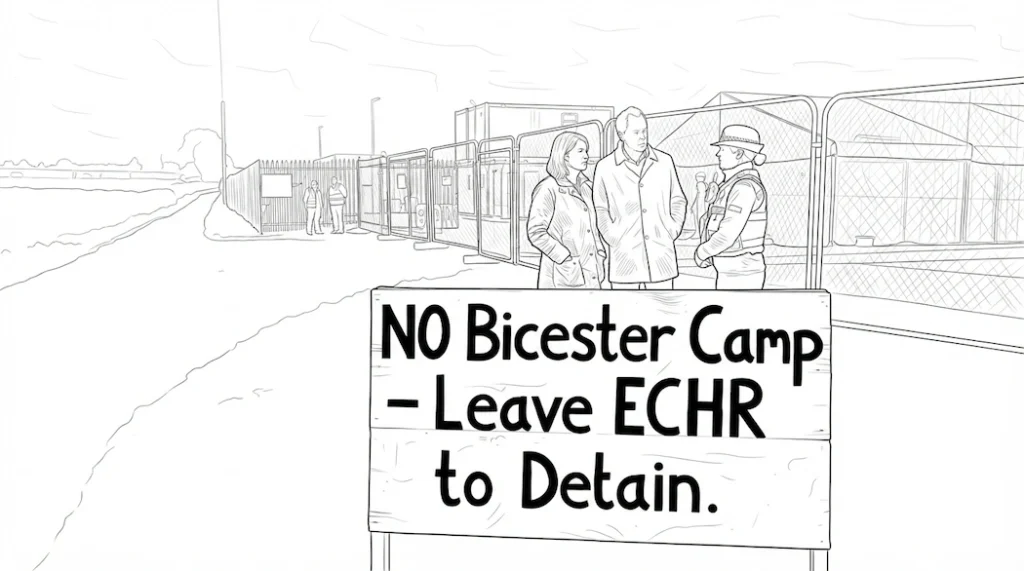
Following the government’s decision to grant planning approval for an asylum centre housing more than 1,200 male migrants at the former MoD Bicester site near Piddington, frustration in the Oxfordshire village has spilled into the national spotlight. After holding a symbolic independence vote and preparing a legal challenge, Piddington residents have become the latest focal point in a widening debate over how Britain manages illegal entry—and whether the UK must leave the European Convention on Human Rights (ECHR) to regain control of its borders.
For critics of the current asylum system, the dispute in Piddington highlights a fundamental flaw in British immigration policy. Campaigners and opposition figures argue that when individuals enter the country illegally, their movements within Britain should be strictly restricted in secure facilities until full identity and security vetting has been completed.
Under current arrangements, while the government maintains that former military sites are designed to be self-contained with 24/7 security and CCTV, local residents and critics contend that housing unvetted entrants in open or semi-open accommodation near rural communities places unacceptable pressure on local services and raises legitimate safety concerns. From this viewpoint, mandatory detention prior to any grant of refugee status should not be an afterthought—it should be a non-negotiable condition of housing anyone who arrives through irregular routes.
The Case for Leaving the ECHR
Supporters of tighter border enforcement argue that the primary obstacle to implementing automatic detention and swift deportation is Britain’s continued membership in the ECHR, incorporated into domestic law through the Human Rights Act 1998.
Those advocating withdrawal point to several core arguments:
- Restoring Parliamentary Sovereignty: Critics contend that rulings from the European Court of Human Rights (ECtHR) in Strasbourg—and the requirement for UK judges to take Strasbourg case law into account—have repeatedly tied the hands of elected British governments. Leaving the ECHR would allow Parliament to pass clear, unambiguous laws governing the detention and removal of illegal entrants without external judicial intervention.
- Ending Legal Delays: Proponents argue that Articles 3 and 8 of the Convention are routinely used to contest detention and removal decisions, creating prolonged legal battles while the taxpayer foots the bill for accommodation.
- Using Local Momentum for National Reform: Campaigners urging voters to back parliamentary petitions for ECHR withdrawal argue that local battles like Piddington’s can only treat the symptoms. Without leaving the Convention, they warn, communities across Britain will continue to face the prospect of large-scale asylum sites imposed upon them.
A Defining Choice for Voters
As Piddington prepares its legal challenge over the MoD Bicester site, the village’s protest has underscored a stark division in British politics. For those who believe that entering the UK illegally must carry the immediate consequence of restricted movement and secure detention until vetted, the message is clear: meaningful reform begins with Britain writing—and enforcing—its own laws outside the jurisdiction of the ECHR.