Website Page Content The Invisible Eviction
For decades, the foundation of digital marketing was simple: if you paid to build a website, launch products, and publish content, search engines would show it to the world. You bought the digital real estate, so you owned the audience.
That foundation has just turned to dust.
The Reality: Google has run out of the computing power required to keep up with the internet. To save money, its algorithm is transitioning from a system that catalogs everything to a system that compresses reality.
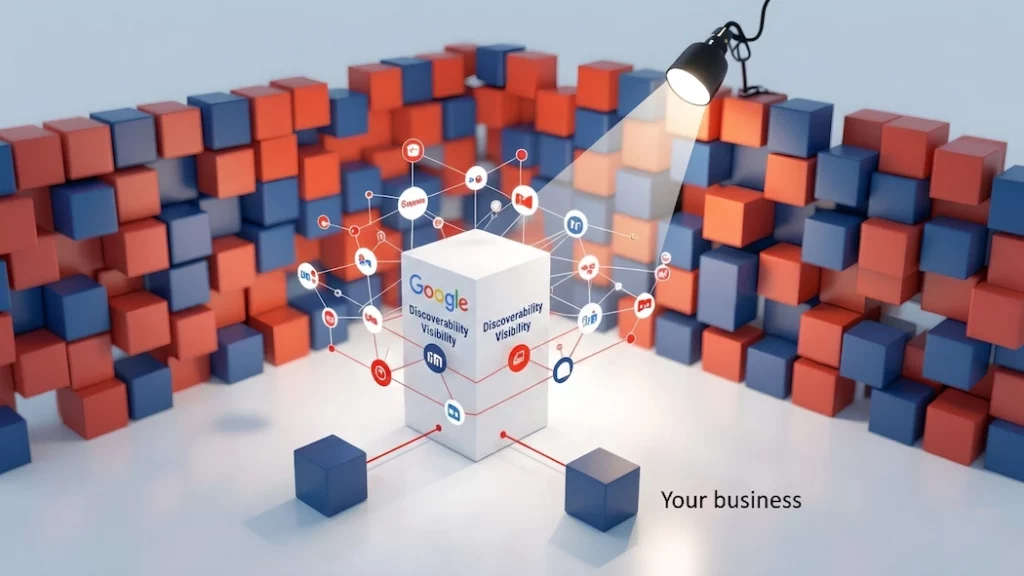
Why This Matters To You: Your website isn’t being penalized or banned for doing something wrong. It is being structurally excluded because it is too expensive for Google to index. The terrifying truth is that the decision of whether your business is allowed to be visible online is now completely out of your hands.
Cost of Crawling
The New Reality: Crawling is not free. It requires immense data center bandwidth, physical electricity, server cooling, and massive computational overhead to parse JavaScript and run rendering engines. In an era where tech companies are hyper-focused on efficiency and data center margins, Google cannot justify spending millions of dollars in electricity to crawl and index trillions of low-value, repetitive pages that no human will ever search for.
The Math of the “Data Deluge” vs. Hard Infrastructure
The internet’s growth is no longer linear; it is mathematically explosive.
E-commerce Bloat: A single modern e-commerce site can dynamically generate millions of URL variations based on filters, colors, sizes, and tracking parameters.
The AI Multiplier: Generative AI has made the cost of creating content essentially zero. An individual or automated script can spin up millions of grammatically correct, fully formed articles in an afternoon.
If Google attempted to maintain a 1:1 index of the entire web, its infrastructure costs would scale exponentially while its advertising revenue only scales linearly. The physics of hardware simply cannot keep pace with the infinite scale of machine-generated text.
From Cataloging Reality to Compressing It
For most of the history of the internet, businesses believed search engines worked like giant digital libraries. Websites published information, search engines crawled that information, and users retrieved it through search results. If a page existed online and followed basic technical rules, it had a reasonable chance of being indexed and discovered. That assumption is now quietly collapsing. We are transitioning from an era of information retrieval — where search engines attempted to catalogue reality — into an era of probabilistic modelling, where search systems increasingly compress reality into simplified representations of what they believe matters most. The implications for businesses are enormous because the modern web now contains vastly more content than can realistically be crawled constantly, indexed deeply, ranked efficiently, and retrieved instantly.
Every second, new websites, ecommerce pages, AI-generated articles, videos, reviews, social posts, and automated content variations flood the internet. The scale is no longer merely large. It is computationally overwhelming. Search engines can no longer fully represent the entire web equally, so modern systems are increasingly forced to decide which information deserves deep representation and which information remains peripheral, lightly processed, or effectively invisible. This means the critical question is no longer simply “Does your content exist?” The new question is: “Does your content exist strongly enough to become part of the algorithm’s internal model of the world?”
Modern Search Engines Are Building Models, Not Libraries
Many businesses still approach SEO as though Google is simply storing documents inside a giant searchable database. In reality, modern search systems increasingly function more like compression systems. Their task is not merely to retrieve pages; it is to reduce overwhelming informational complexity into manageable representations. This process resembles how mapping software simplifies geography. A map cannot display every physical detail on Earth, so it compresses reality into representative structures that preserve what appears most useful. Modern search systems now perform a similar function across information itself.
The Hidden Meaning Behind “Crawled — Currently Not Indexed
When content fails to become part of the system’s probabilistic model, it does not necessarily disappear physically. The page still exists online. The server still hosts it. The URL still resolves. But structurally, the content becomes absent from the discoverable web. Not banned. Not penalised. Simply excluded from the model. This is one reason many businesses now encounter “Crawled — currently not indexed” behaviour inside Google Search Console. Historically, such messages were interpreted as technical problems. Increasingly, however, they may reflect something far more structural. The system crawled the page, understood the page, and simply decided the page did not sufficiently improve its model of the web.
The End of “More Content = More Traffic”
Search systems today constantly estimate probabilities. Is this page sufficiently distinct? Does it materially improve retrieval quality? Does it reinforce an already understood concept? Is this information likely to satisfy meaningful search demand? Does this content expand the model or merely repeat it? These are not binary decisions. They are probabilistic estimations about informational value relative to computational cost. This is where many businesses unknowingly encounter a dangerous visibility trap. Most organisations still believe digital growth is achieved primarily through volume: publish more articles, create more landing pages, add more product variations, and expand content output continuously. For years this strategy often worked because search engines still operated closer to large-scale retrieval systems. Today, however, excessive similarity may actually weaken visibility because search systems increasingly filter for representational efficiency rather than sheer informational quantity.
Why Publishing More Pages No Longer Guarantees More Visibility
If search systems already believe they understand a website’s conceptual territory, additional pages that merely reinforce the same interpretation may fail to become independently represented inside the system’s model. In effect, the website begins competing against its own existing representation. This creates a silent form of structural exclusion. Unlike traditional censorship, nothing is directly removed, no warning appears, and no explicit penalty is applied. The content simply fails to achieve meaningful representational existence within the algorithmic model governing discoverability. This is why understanding how Google evaluates websites has become increasingly important for organisations attempting to maintain visibility in modern search systems.
Many organisations continue investing heavily in content production while overlooking the more important issue: how search systems currently interpret the structure, relationships, authority flow, and conceptual identity of the website itself. Modern search visibility increasingly depends not merely on publishing information, but on becoming structurally legible within the probabilistic systems that compress and organise the web. This may explain why some websites continue expanding content output while experiencing declining indexing rates, unstable rankings, and plateauing visibility. The issue is often not poor content quality in the traditional sense. The issue is that the search system has already formed a relatively stable model of what the website represents.
New content is therefore evaluated against that existing interpretation. If the new material does not sufficiently alter or expand the model, it may remain weakly represented regardless of technical correctness. This shift also helps explain the growing dominance of highly centralised informational entities online. Search systems increasingly favour sources that appear structurally stable, semantically reinforced, heavily connected, and computationally efficient to model. Large authoritative hubs become easier for algorithms to compress into stable representations. Smaller or more fragmented sites often struggle to achieve equivalent modelling priority. This is one reason concepts such as structural authority flow and internal graph relationships are becoming increasingly important in understanding modern search visibility.
Why the AI Content Boom Is Changing Who Gets Seen Online
The rise of AI-generated content accelerates this trend dramatically. Large language models can now generate content at scales impossible for human publishers. Millions of pages can be created rapidly, each technically unique but semantically overlapping. Search systems cannot realistically allocate equal processing depth to this expanding informational universe. As a result, selectivity intensifies. The future web may therefore become increasingly compressed around dominant conceptual clusters, recognised entities, trusted structural hubs, and representative documents that stand in for vast surrounding informational territories. This creates uncomfortable philosophical questions. Who determines what becomes part of the model? Which perspectives remain visible? Which businesses achieve representational permanence? Which ideas become structurally invisible despite technically existing online?
In previous eras, freedom of expression focused primarily on the right to publish information. In the emerging algorithmic era, however, discoverability itself becomes the more important battleground because content that cannot meaningfully enter the system’s probabilistic model may still exist physically while remaining practically absent from public visibility. This is the hidden transformation now reshaping the internet. We are no longer simply competing for rankings inside a retrieval engine. We are competing for representational existence inside systems attempting to compress the complexity of reality itself. Businesses attempting to understand this shift in greater depth may also benefit from examining why SEO progress often plateaus, how graph SEO influences ranking interpretation, and the broader evaluation framework explained on how the Strategic Search Authority Review works.
The Bottom Line for Business
Your content is not necessarily being penalised or banned because you did something wrong. Increasingly, content is excluded because the computational cost of fully processing, modelling, storing, and retrieving it outweighs the system’s estimated value of representing it. In other words, your business may become invisible not because it lacks quality, but because it fails to achieve sufficient importance inside the algorithm’s compressed model of the web. The uncomfortable reality is that the decision to make your business visible is no longer fully in your control. Modern search systems increasingly decide what deserves representational existence, what becomes structurally peripheral, and what quietly disappears into the expanding informational noise of the internet.
Further Reading & Reference Material
Google Developers – Crawling & Indexing Documentation:
https://developers.google.com/search/docs/crawling-indexing
Yoast – Understanding “Crawled – Currently Not Indexed”:
https://yoast.com/crawled-currently-not-indexed-google-search-console/
Documenting Large Webtext Corpora (C4 Research Paper):
https://arxiv.org/abs/2104.08758
QAnswer: Towards Question Answering Search over Websites:
https://arxiv.org/abs/2401.09175


