The Fragile Corridor: How the Iran War Could Break the World’s Oil Supply — and Its Internet Backbone
By Gordon Barker
The Global Energy Corridor: Oil tankers leaving the Persian Gulf pass through the Strait of Hormuz, Bab-el-Mandeb and the Suez Canal before reaching Europe and global markets.
When wars erupt in the Middle East, markets instinctively watch the price of oil. But the emerging confrontation involving Iran raises a deeper and more complex danger than previous conflicts. This is not simply a regional war over territory or political influence; it is a potential disruption to the fragile corridor that links global energy flows, shipping routes, and the digital infrastructure of the modern internet.
From the Strait of Hormuz in the Persian Gulf to the Bab-el-Mandeb gateway at the mouth of the Red Sea, the same narrow chain of waterways now carries both the world’s fuel and a large portion of its communications infrastructure. If that corridor were seriously disrupted, the consequences would extend far beyond oil prices. Trade routes, data traffic, supply chains, and the stability of the global economy itself could all be affected.
A Different Kind of Middle Eastern War
To understand the stakes today, it helps to look back at the Iraq War of 2003. At the time, many analysts feared that the invasion would trigger a major oil crisis similar to the shocks of the 1970s. Oil prices surged in the weeks leading up to the conflict as traders anticipated damage to Iraqi production or a wider regional escalation.
Yet when the war began, something unexpected happened: oil prices actually fell. Although the fighting occurred inside Iraq, the global oil transport system continued to function. Tankers still moved through the Persian Gulf, the Strait of Hormuz remained open, and neighbouring oil producers maintained exports.
Once the uncertainty surrounding the invasion disappeared, the so-called “war premium” embedded in oil prices evaporated.
The current tensions involving Iran are fundamentally different. Iraq in 2003 was a producer within the system. Iran sits beside the system’s most important chokepoint.
The Strait of Hormuz: The World’s Energy Valve
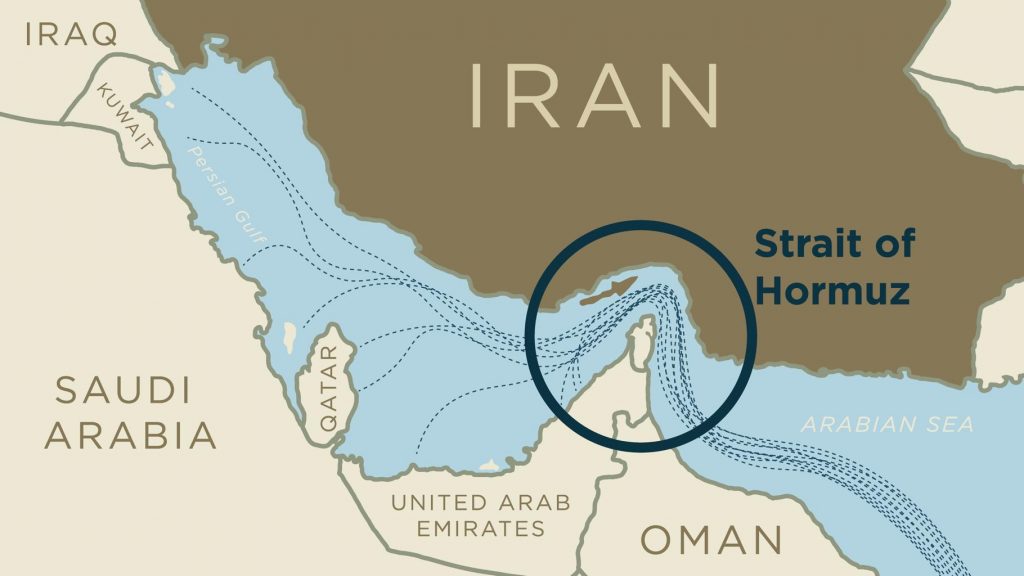
The Strait of Hormuz is widely regarded as the most critical energy passage in the world. Roughly one-fifth of global oil consumption passes through this narrow stretch of water linking the Persian Gulf to the Indian Ocean.
Every day, tankers carrying crude from Saudi Arabia, Iraq, Kuwait, the United Arab Emirates, and Iran navigate the corridor on their way to markets in Asia, Europe, and North America.
Because the channel is so strategically vital, even the suggestion that it could be threatened is enough to send oil markets into turmoil.
But Hormuz is only the first link in a longer chain of global trade routes.
The Bab-el-Mandeb Factor
Once oil tankers exit the Persian Gulf, many continue westward through another narrow passage: the Bab-el-Mandeb Strait. This gateway connects the Gulf of Aden to the Red Sea and forms the southern entrance to the maritime corridor leading toward the Suez Canal.
Millions of barrels of oil and petroleum products pass through Bab-el-Mandeb each day. The route also carries container ships transporting goods between Asia and Europe.
If traffic through the Red Sea were interrupted, ships would be forced to reroute around the southern tip of Africa via the Cape of Good Hope. This detour adds thousands of miles and more than a week to many journeys.
Shipping costs would surge, supply chains would slow, and energy deliveries to European markets could be delayed.
The Hidden Infrastructure Beneath the Sea

Few people realise that the same route used by oil tankers also carries a substantial portion of the world’s digital communications.
Beneath the waters of the Red Sea lies a dense network of fibre-optic cables that connect Europe with the Middle East, Africa, and Asia. These submarine cables form part of the global internet backbone, transmitting enormous volumes of data every second.
Financial transactions, cloud computing services, international communications, and large segments of global internet traffic rely on this infrastructure.
Many of these cables converge in Egypt, where they cross a narrow land corridor before continuing into the Mediterranean Sea. This creates a concentrated digital chokepoint within a relatively small geographic area.
If multiple cables in the region were damaged or disrupted, internet traffic would not disappear entirely. The global network is designed with redundancy. However, major slowdowns and rerouting of global data traffic could occur.
Markets React Faster Than Wars
Modern energy markets react instantly to geopolitical risk. Oil prices today are shaped not only by physical supply but by expectations. Traders constantly evaluate geopolitical developments and incorporate them into futures markets.
If a chokepoint such as Hormuz or Bab-el-Mandeb were threatened, markets would react within minutes — long before any physical shortage occurred.
This dynamic makes strategic waterways uniquely powerful in global markets. A single missile strike, drone attack, or naval confrontation near a chokepoint can ripple through financial systems worldwide.
Why This Conflict Is Not Iraq
Comparisons between today’s tensions and the Iraq War overlook a crucial distinction. The 2003 conflict took place within a country that exported oil, while the infrastructure connecting global markets remained intact.
The present situation involves the possibility of conflict around the transport system itself.
Hormuz, Bab-el-Mandeb, and the Red Sea corridor form the connective tissue linking producers to consumers.
If those connections weaken, the impact becomes systemic.
Energy markets, shipping logistics, and digital networks would all feel the strain simultaneously.
The Fragility of a Connected World
The deeper lesson of the current geopolitical moment is that modern economies depend on surprisingly narrow physical corridors. The global system of energy supply, trade routes, and digital communications has evolved along pathways shaped by geography, history, and engineering efficiency.
These pathways work remarkably well in times of stability. But they also concentrate risk.
A handful of straits and cable corridors now carry a significant portion of the world’s economic activity.
The Strait of Hormuz, Bab-el-Mandeb, and the Red Sea fibre-optic network illustrate how physical geography continues to shape the architecture of the digital and energy age.
Wars in the region therefore carry implications that extend far beyond the Middle East itself. They test the resilience of the infrastructure that connects the world.


