Could Naval Protection Prevent an Energy Shock? The Strategic Debate Around Britain’s Role in Protecting Global Trade Routes
By Gordon Barker
The Royal Navy has historically played a central role in protecting maritime trade routes during periods of geopolitical tension. In scenarios where shipping lanes face heightened risk, naval deployments are often used to escort commercial vessels, monitor maritime traffic and deter attacks on civilian shipping. Such operations are not necessarily part of a direct war effort, but rather an effort to maintain freedom of navigation and protect the infrastructure that supports global trade.
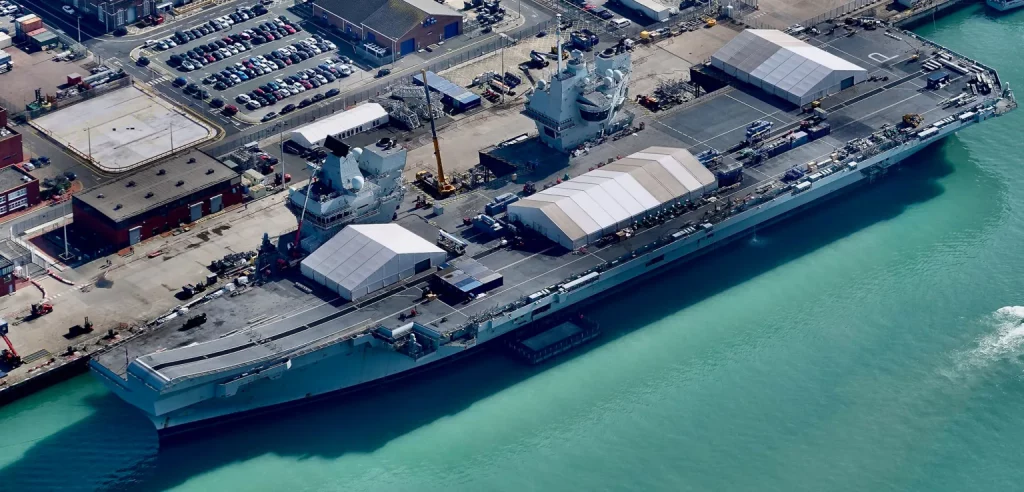
Carrier strike groups and escort vessels provide surveillance, air defence and rapid response capabilities that can help stabilise maritime environments. Their presence signals that major trading powers intend to keep vital sea lanes open, particularly in regions where a large proportion of global energy supplies pass through narrow chokepoints.
In this sense, naval forces can function as a stabilising presence. By protecting commercial shipping and ensuring that tankers and cargo vessels can continue operating safely, they help maintain the flow of goods, energy and information that modern economies depend upon.
Global energy corridor showing Strait of Hormuz Bab el Mandeb and Suez Canal oil routes.
When tensions rise in the Middle East, global markets instinctively watch the price of oil. Yet the true strategic issue facing governments is not simply energy supply but the stability of the narrow maritime corridors through which the world’s fuel, trade, and digital communications now flow.
From the Strait of Hormuz at the mouth of the Persian Gulf to the Bab-el-Mandeb gateway leading into the Red Sea, a chain of narrow waterways forms one of the central arteries of the global economy. Oil tankers, liquefied natural gas shipments, container vessels and even submarine internet cables depend on this corridor.
If that corridor were seriously disrupted, the consequences would extend far beyond regional politics. Energy markets, global shipping routes, supply chains and the digital infrastructure of the modern internet could all feel the impact simultaneously.
The Iraq War and the Lessons of 2003
To understand the strategic concerns today, it is useful to look back at the Iraq War of 2003. In the months before the invasion began, oil prices rose sharply as traders anticipated a possible disruption to Iraqi production or the wider Persian Gulf region.
Yet when the war actually started, oil prices fell rather than surged. The reason was straightforward. Although the fighting occurred within Iraq, the infrastructure supporting global oil transport remained intact. Tankers continued to move through the Persian Gulf, neighbouring producers maintained exports, and the Strait of Hormuz remained open.
Once the uncertainty surrounding the invasion passed, the so-called “war premium” embedded in energy markets disappeared.
The situation today is fundamentally different. Iraq in 2003 was a producer operating within the global system. Iran sits beside one of the system’s most important transport chokepoints.
The Strait of Hormuz: The World’s Energy Valve
The Strait of Hormuz is widely regarded as the most critical energy passage in the world. Roughly one fifth of global oil consumption flows through this narrow channel connecting the Persian Gulf to the Indian Ocean.
Every day, tankers carrying crude from Saudi Arabia, Iraq, Kuwait, the United Arab Emirates and Iran pass through the corridor before heading toward markets in Asia, Europe and beyond.
Because such a large share of global supply travels through a single route, even the perception that the strait might be threatened can cause significant volatility in oil markets.
Yet Hormuz is only the first link in a longer chain.
The Bab-el-Mandeb Factor
Once tankers exit the Persian Gulf, many continue westward through another narrow passage: the Bab-el-Mandeb Strait. Located between Yemen and the Horn of Africa, this gateway connects the Gulf of Aden to the Red Sea.
From there, ships travel north toward the Suez Canal, the shortest maritime route linking Asia with Europe.
Millions of barrels of oil and petroleum products pass through this corridor every day. In addition to energy shipments, the route carries container vessels transporting manufactured goods between Asian factories and European markets.
If traffic through the Red Sea were interrupted, ships would be forced to reroute around the southern tip of Africa via the Cape of Good Hope. This detour adds thousands of miles and more than a week to many voyages, increasing shipping costs and delaying deliveries.
For energy markets that depend on tightly balanced supply chains, such delays can quickly translate into price volatility.
The Hidden Infrastructure Beneath the Sea
Few people realise that the same route used by oil tankers also carries a substantial portion of the world’s digital communications.
Beneath the waters of the Red Sea lies a dense network of fibre-optic cables forming part of the global internet backbone. These submarine cables connect Europe with the Middle East, Africa and Asia, transmitting enormous volumes of data every second.
Financial transactions, cloud computing services, global communications and international internet traffic all depend on this infrastructure.
Many of these cables converge in Egypt, where they cross a narrow land corridor before continuing into the Mediterranean Sea. This geographic concentration means that disruptions in the region could affect both physical trade routes and digital communications.
Although the internet is designed with redundancy, multiple cable failures could slow global data traffic and force communications to reroute through longer pathways.
Markets React Faster Than Wars
Modern energy markets respond rapidly to geopolitical developments. Oil prices are influenced not only by physical supply but also by expectations about future risks.
If traders believe that a major shipping route may be threatened, that risk is quickly incorporated into futures markets.
This means that even the possibility of disruption to the Strait of Hormuz or Bab-el-Mandeb can produce dramatic price movements long before any physical shortage occurs.
Shipping insurance markets also react quickly. When insurers designate a region as a war-risk zone, tanker operators may hesitate to enter the area without higher insurance premiums or naval protection.
These dynamics mean that maintaining confidence in the security of shipping lanes can be just as important as maintaining the physical flow of oil itself.
Could a Carrier Deployment Stabilise Markets?
One of the key questions facing policymakers and market analysts is whether the visible deployment of naval forces could help stabilise energy markets during periods of geopolitical tension. While military deployments cannot control oil prices directly, they can influence the factors that drive volatility in global energy markets.
Oil markets react not only to physical supply disruptions but also to perceived risk. When traders believe that critical shipping routes may be threatened, a “risk premium” is rapidly incorporated into futures prices. This premium reflects the possibility that tankers could be delayed, insurance costs could surge, or shipments might be interrupted entirely.
A carrier strike group operating near strategic chokepoints such as the Strait of Hormuz or the Bab-el-Mandeb Strait can reduce this uncertainty. Naval forces provide surveillance of maritime traffic, early detection of potential threats, and defensive capabilities against drones or missiles targeting commercial vessels.
Even when no direct engagement occurs, the presence of a large naval task force can signal that freedom of navigation will be protected.
Financial markets often respond to such signals. If traders believe that major maritime powers are committed to keeping shipping lanes open, the perceived probability of supply disruption declines. In turn, the geopolitical risk premium embedded in energy prices can fall.
Historical experience suggests that maintaining confidence in the security of trade routes can be as important as maintaining the flow of oil itself.
A Fragile Global System
The deeper lesson emerging from current geopolitical tensions is that modern global trade depends on surprisingly narrow physical corridors.
Oil tankers, container ships and submarine internet cables all converge along routes shaped by geography and economic efficiency. These pathways function remarkably well in periods of stability, enabling the rapid movement of energy, goods and information across continents.
However, the same concentration also creates vulnerability.
Disruptions in a handful of strategic locations can ripple through energy markets, supply chains and digital networks simultaneously.
As geopolitical tensions continue to evolve, governments and security planners are increasingly aware that protecting these corridors is not simply a regional concern. It is a matter of global economic stability.
The question facing policymakers is not only how conflicts in the Middle East unfold, but how the infrastructure connecting the world can remain resilient in the face of those tensions.
A new analysis published on TopNews23 examines how the corridor linking Hormuz, Bab-el-Mandeb and the Red Sea could become one of the most fragile points in the global economy.


